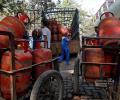
Petroleum and oil marketing companies raised the price of commercial liquid petroleum gas (LPG) cylinders by Rs 350.50 per unit and domestic LPG cylinders by Rs 50 per unit with immediate effect from Wednesday.
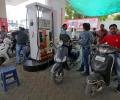
More than a week after state-owned oil firms ended a 19-day pre-Karnataka poll hiatus on revising fuel prices, petrol and diesel rates have touched record highs.
The government has cut the windfall profit tax on crude oil produced in the country while the levy on exports of diesel and ATF has been hiked, an official notification said. The tax, levied in the form of special additional excise duty or SAED, on domestically produced crude oil was reduced to Rs 6,700 per tonne from Rs 7,100 a tonne. SAED on the export of diesel was increased to Rs 6 per litre from Rs 5.50 a litre and on jet fuel or ATF to Rs 4 per litre from Rs 2, the notification said.

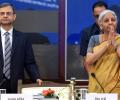
Sanjay Malhotra takes charge as the 26th RBI governor at a time when headline retail inflation has shot up to 6.2%.
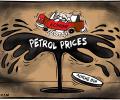
Hyderabad on Monday became the second metro city in the country to see petrol price crossing Rs 100 per litre mark after fuel prices were raised yet again. Petrol price was hiked by 29 paise per litre and diesel by 30 paise, according to a price notification of state-owned fuel retailers. The hike -- 24th in six weeks -- pushed fuel prices across the country to new historic highs. In Delhi, petrol hit an all-time high of Rs 96.41 a litre, while diesel is now priced at Rs 87.28 per litre.

The government on Thursday more than doubled the price of natural gas that is used to produce electricity, make fertilisers, turned into CNG and piped to household kitchens for cooking, on the back of a spike in global energy prices. The price of gas produced from old regulated fields, such as the nation's largest gas field of Bassein of ONGC, will rise to a record high of $6.10 per million British thermal unit (mmBtu) from the current $2.90 per mmBtu, according to the oil ministry's Petroleum Planning and Analysis Cell (PPAC). The new price, which is likely to result in a hike in CNG and piped cooking gas rates, will be for six months beginning April 1.
Shares of low-cost airline IndiGo hit record high on the bourses soon after reports of pilot crisis at Vistara emerged. The development also saw airfares surge by around 25 per cent on select routes. Shares of IndiGo hit a lifetime high of ~3,68.5 on April 2, 2024, and has gained 2.4 per cent on the bourses in April.

When Finance Minister Pranab Mukherjee entered the Committee Room in North Block for the empowered group of ministers' meeting on fuel price hike on Monday, he found Communications Minister A Raja already sitting there.
The finance ministry is not revising its inflation target of 5 to 5.5 per cent for 2005-06 even after the fuel price hike.

The expert group was tasked to suggest a methodology for pricing of diesel and cooking fuel.
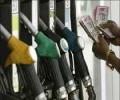
The government on Monday raised the price of ethanol for blending with fuel at Rs 27 per litre from existing Rs 21.50 per litre.
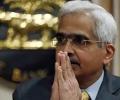
Reserve Bank Governor Shaktikanta Das on Friday stressed that the monetary policy must remain actively disinflationary to ensure that the decline in inflation from its peak of 7.44 per cent in July continues smoothly. Addressing the Kautilya Economic Conclave 2023, he also said price stability and financial stability complement each other and it has been an endeavour at RBI to manage both efficiently. Retail inflation declined to a three-month low of 5.02 per cent annually in September on account of moderation in vegetables and fuel prices, and was back within the Reserve Bank's comfort level.
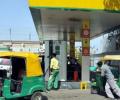
CNG price in the national capital and adjoining cities on Tuesday was hiked by Rs 0.50 per kg, while an imminent increase in petrol and diesel price has been put on wait-and-watch mode for more clarity on global oil prices. CNG price in NCT of Delhi has been increased to Rs 57.51 per kg from Rs 56.51, according to the information posted on the website of Indraprastha Gas Ltd - the firm which retails CNG and piped cooking gas in the national capital. Following the firming up of international gas rates, IGL has been raising CNG rates by up to 50 paise (Rs 0.50) per kg periodically. Prices have gone up by about Rs 4 per kg this year alone.

All the operations of All India Motor Transport Congress will be shut and trucks will go off the road from April 5, AIMTC President G R Shanmugappa said in New Delhi.
After being hit by a fuel price hike and capacity cut, it may be happy times again for the airline industry this festive season. While Kingfisher is looking at adding at least 15 new flights in the winter season, competitors Jet Airways, SpiceJet, IndiGo and Paramount are adding over 30 new flights together (arrivals and departures); they will do this through a combination of better utilisation of existing aircraft and inducting new fleet.
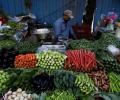
Wholesale price-based inflation rate fell to a 3-year low of (-) 3.48 per cent in May on easing prices of food, fuel and manufactured items, strengthening the case for continuing with the pause in rate hike in the coming months of the current fiscal. This is the second straight month when WPI has been in the negative zone mainly on account of a higher base and falling prices of fuel and manufactured goods. Food prices also eased during May. In May, 2022 WPI inflation was at 16.63 per cent. Last month, it was (-) 0.92 per cent.
A government official said out that with hardly any economic activity, an immediate duty hike will not be productive and could be announced once the lockdown eases and demand revives.
As common people grope for means to counter the ever-increasing prices of essential commodities, the economists and financial analysts fear that the recent hike in fuel prices would soon push inflation past 9 per cent. In an interview to rediff.com's special correspondent A Ganesh Nadar, Economic advisor to the Tata group Siddhartha Roy, shared his thoughts on the vexing issue of India's inflation.
State-owned Indian (formerly Indian Airlines) on Wednesday said it has introduced a fuel surcharge of Rs 300 for travel on domestic sectors due to steep hike in aviation turbine fuel prices.
With crude oil touching a record $72 per barrel, Indian Oil Corporation is seeking a Rs 5.6 per litre increase in petrol and Rs 7.6 a litre hike in diesel prices to offset the Rs 80-crore (Rs 800-million) revenue loss per day.
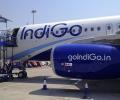
Long-term macro trends indicate growth in demand for air travel. Trends from the ticketing website MakeMyTrip indicate a likely annual growth of between 11-17 per cent in Indian air travel demand over FY24-30. Through that period, InterGlobe Aviation or IndiGo may continue to make gains in market share in both domestic and international travel, aided by large fleet additions. IndiGo is the largest global customer of Airbus by far with 950 aircraft orders outstanding.

The Reserve Bank on Wednesday hiked key benchmark policy rate by 25 basis points to 6.5 per cent, citing sticky core inflation. This is the sixth time interest rate has been hiked by the Reserve Bank of India (RBI) since May last year, taking the total quantum of hike to 250 basis points. Announcing the bi-monthly monetary policy, RBI Governor Shaktikanta Das said the Monetary Policy Committee (MPC) by a majority decided to raise the policy repo rate by 25 basis points and keep a 'strong vigil' on inflation outlook.

Housing prices increased by up to 11 per cent annually across eight major cities during January-March period of this year due to a rise in demand for residential properties and a sharp hike in rates of construction raw materials, according to a joint report by CREDAI, Colliers and Liases Foras. Delhi-NCR witnessed highest rise in housing prices by 11 per cent to Rs 7,363 per sq ft during January-March 2022 as compared to the year-ago period, as per the first edition of Housing Price-Tracker report by realtors body CREDAI, real estate consultant Colliers and data analytics firm Liases Foras. Hyderabad witnessed 9 per cent increase in housing prices to Rs 9,232 per square feet, while Ahmedabad saw a 8 per cent appreciation to Rs 5,721 per square feet and Kolkata 6 per cent to Rs 6,245 per square feet.
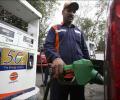
An increase in petrol, diesel, domestic cooking gas (LPG) and kerosene prices looks "imminent" after the Finance Ministry said it has no money to provide for fuel subsidy.
The government on Friday ruled out an immediate increase in petrol and diesel prices in line with rise in international oil prices.
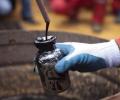
Centre and state governments are steadily increasing excise duties and value-added tax

India's used car market, which has been growing steadily at 10-12 per cent over the last 2-3 years, is expected to reach $40 billion in FY26.

The government on Tuesday increased the windfall profit tax on crude oil produced in the country and reduced the levy on exports of diesel. The tax, levied in the form of Special Additional Excise Duty or SAED, on domestically produced crude oil was increased to Rs 9,800 per tonne from Rs 9,050 a tonne, according to an official notification. SAED on the export of diesel was reduced to Rs 2 per litre from Rs 4 a litre and on jet fuel or ATF to nil from Rs 1, the notification said.
In August, passenger car sales dropped 18 per cent to 118,142 units, the sharpest decline in nearly 10 months, due to weak consumer sentiment and a month's lockout at Maruti Suzuki. Sales of diesel-driven utility vehicles grew 70 per #162 this is likely to be affected by the price rise.
Housing loan, car loans, personal loans and education loan will get costlier in the months to come.
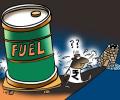
A rise in petrol and diesel consumption can help the government cut cesses on the fuels by Rs 4.5 a litre without impacting revenue collections of FY21, and help cool off the pressure on inflation, domestic rating agency ICRA said on Friday. Petrol consumption is estimated to increase 14 per cent in 2021-22 and diesel by 10 per cent on the lower base, rise in mobility and economic recovery, ICRA said. The rating agency added that it will result in an additional Rs 40,000 crore in revenue for the government through higher collections of the cess.
The government is yet to make up its mind on increasing auto fuel prices and more consultations are likely before a decision is taken on the issue in step with the surge in international crude oil prices.

The issue of hike in fuel prices is expected to generate heat in the Parliament meeting on Wednesday after a four-day break. This became clear with the opposition planning a series of meetings to strategise its protests and demand rollback in the Lok Sabha and the Rajya Sabha.
Petrol and diesel prices are unlikely to be hiked in the near future, with Finance Minister P Chidambaram agreeing in-principle to share a third of the revenue loss that state-run oil firms incur on sale of fuel
Diesel prices should be immediately hiked by Rs 4-5 per litre, the Kirit Parikh Committee has recommended while favouring continuation of existing pricing principles for controlled petroleum products.

The company attributed the hike to depreciating rupee and rising input costs.
Quibbling between the Centre and the states on who should provide more relief to consumers on fuel prices intensified with the latter asking the Union Government to give an account of accruals to it from the latest hike in petrol and diesel prices.
